
A red border bleeding into a cream background can permanently change the appearance of a Chinese rug. Chinese rug cleaning requires careful attention to the dyes, fibres and construction because the wrong treatment can damage details that took considerable skill to create.
Many Chinese rugs combine dense wool piles with decorative borders, floral motifs or silk highlights. Others have carved surfaces that create subtle shadows as light moves across the room. These features make each rug distinctive, but they also influence how it should be cleaned.
In Sydney, a rug might collect beach sand near a balcony door, fade beside a sunlit window or remain damp after an accidental spill during wet weather. Understanding these risks helps homeowners protect their rugs before everyday wear causes lasting damage.
Why Chinese Rug Cleaning Needs Care
A rug can look reasonably clean while fine grit remains trapped between its fibres. This often happens beneath dining tables and sofas, where repeated foot traffic presses particles deeper into the pile. Over time, the grit can contribute to wear and leave the surface looking dull.
Visible dirt tells only part of the story. A rug may also have loose knots, weakened edges, unstable dyes, or repairs that aren’t obvious from above.
Before selecting a treatment, a cleaner needs to establish what the rug can tolerate. Its fibre composition, dye stability and foundation condition all influence the decision. A method suitable for a sturdy wool rug may be inappropriate for a delicate silk piece.
An initial assessment should cover four areas:
- Fibre composition: Identify wool, silk and any blended materials.
- Dye stability: Check whether colours may transfer during treatment.
- Structural condition: Look for loose knots, weak edges and previous repairs.
- Surface condition: Identify flattened pile, worn sections and delicate decorative details.
These checks are particularly useful for rugs that have been in a home for years. Chinese rug cleaning requires careful assessment because regular use doesn’t always cause obvious damage, and an unsuitable cleaning attempt can expose weaknesses that were already present. When choosing a cleaning service, consumers can also refer to the ACCC’s consumer rights and guarantees guidance, which explains service providers’ obligations under Australian Consumer Law.

How Wool and Silk Respond to Cleaning
Wool and silk may appear together in a Chinese rug, but they don’t behave the same way during cleaning. Wool provides a textured surface, while silk often creates finer details with a noticeable sheen. Their different properties influence which products and handling methods are appropriate.
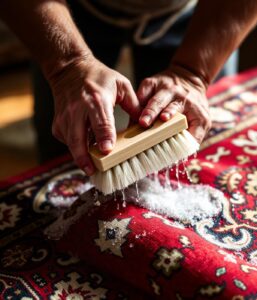
Consider a rug with silk flowers woven into a wool background. If the surface looks dull, aggressive brushing might disturb the silk without removing the dirt responsible for the change in appearance. A general household cleaner could cause further problems if it is unsuitable for either fibre.
Chinese rug cleaning must account for these material differences rather than treat the entire rug as an ordinary carpet.
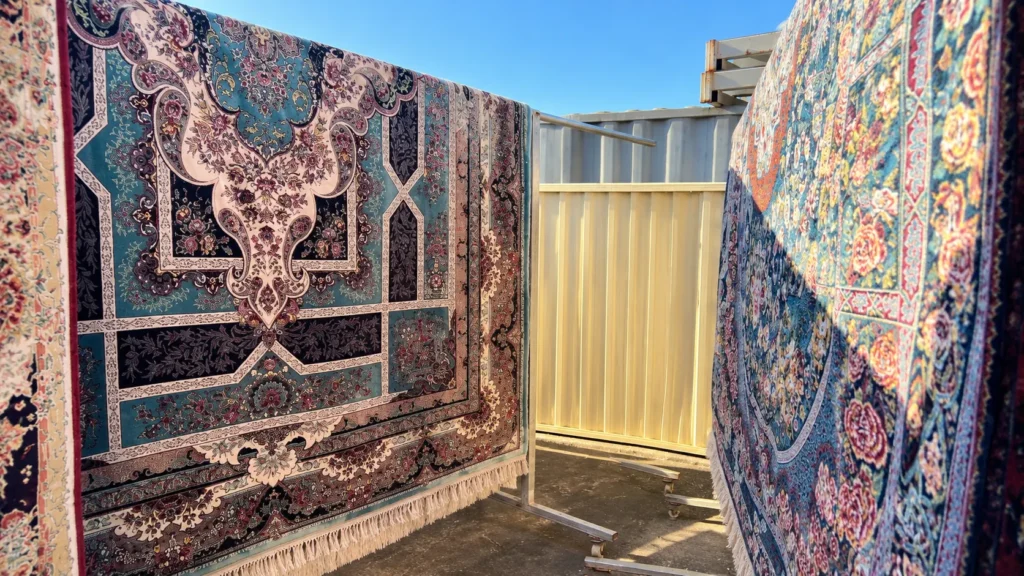
Moisture presents another concern. Some rugs can tolerate a controlled washing process, while others need more cautious treatment because of their fibres, dyes or foundation. Drying matters too, particularly when moisture reaches the underside and cannot escape easily.
This can be difficult in Sydney apartments where residents have limited floor space. A large rug may not be easy to spread out, and folding or storing it while damp can create further problems.
For owners arranging silk rug cleaning or wool rug cleaning, the important question is whether the proposed treatment suits the actual materials and their condition.
How Cleaning Affects Rug Patterns and Colours
The colours in a Chinese rug often work together to define its pattern. A dark border might frame a pale central design, while small floral details provide contrast. When colours shift or fade, the original arrangement can lose definition.
Dye transfer and fading are different problems. Dye transfer occurs when colour moves into another part of the rug, potentially staining a lighter section. Fading involves a loss of colour intensity, which may result from prolonged sunlight exposure or other damaging conditions.
A colourfastness test helps identify dyes that may move during cleaning, although testing cannot eliminate every risk. Chinese rug cleaning should account for dye stability, especially when dark colours sit beside lighter sections.
| Rug feature | Possible problem | Precaution |
| Deep red or blue areas | Colour transfer into pale sections | Test dye stability before cleaning |
| Silk highlights | Changes in sheen | Select a suitable fibre treatment |
| Carved patterns | Flattened decorative details | Avoid aggressive brushing |
| Contrasting borders | Uneven colour movement | Assess individual colours |
| Older sections | Weakness beneath the pile | Inspect the foundation |
Rug colour preservation also depends on what happens after Chinese rug cleaning. A rug beside a large window may receive direct sunlight on the same section every afternoon. Over time, that area can become lighter than the part protected by a sofa or coffee table.
Cleaning cannot restore colour that has permanently faded. However, suitable treatment and sensible placement can help prevent avoidable changes. Curtains, blinds and furniture arrangements can reduce prolonged exposure without requiring a complete change to the room.
When an Antique Rug Needs Attention
An old Chinese rug can look perfectly sound until you turn it over. The pile might still look rich, but the backing could be weak, the fringes worn, or the corners held together by old repairs. Its current condition matters more than age alone when deciding whether it is ready for cleaning.
Consider a rug passed down through a family. One corner has thinned after years beneath a heavy chair, and several threads are beginning to loosen. Washing it straight away could put extra strain on that section. An inspection may show that the corner needs repair first.
Antique Chinese rug cleaning must account for weak areas, previous repairs and dyes that may not tolerate every treatment. Some older colours and marks are part of the rug’s history, not problems that can be removed safely.
Cleaning and restoration are different jobs. Washing can remove accumulated dirt, while restoration addresses physical damage such as broken threads or frayed edges. If a rug is particularly fragile or historically significant, a textile conservator may be the better person to assess it before work begins.
Handmade Rug Cleaning and Craftsmanship
Two rugs with similar patterns can behave very differently during cleaning. One may be hand-knotted with a sturdy wool foundation; another might contain silk details, previous repairs or areas weakened by years of use. Their appearance alone will not tell you how much treatment they can tolerate.
Handmade rug cleaning starts with understanding how the individual piece was constructed. The cleaner needs to consider the foundation, pile, dyes and signs of wear before deciding how to proceed. Excessive friction or unsuitable moisture can damage parts that ordinary vacuuming would not affect.
The same applies to Chinese carpet cleaning. Intricate borders, raised details and contrasting colours can make a rug more complicated to treat than a standard synthetic floor covering. Chinese rug cleaning also needs to account for how handmade construction and previous repairs affect the rug’s condition.
If you’re comparing oriental rug cleaning Sydney providers, ask whether they regularly handle handmade Chinese rugs. Ask how they check for colour bleeding and what they do when they find weak edges or old repairs. The answers should be specific to your rug, rather than a standard explanation given to every customer.
Price matters, but it should not be the only deciding factor. A cleaner who explains the likely results, limitations, and any additional repairs gives you a clearer basis for deciding. No responsible provider should promise to remove every stain before examining the rug.
Chinese Rug Care Around Sydney Homes
Sand from a beach trip can find its way into a rug near the balcony. In a family dining area, crumbs and small spills tend to collect beneath the table, where they may go unnoticed until someone moves the chairs. Different rooms create different cleaning demands, even within the same Sydney home.
Regular Chinese rug cleaning can help manage accumulated grit and everyday soiling, but routine maintenance still matters between professional treatments.
Sunlight is another concern, particularly in apartments with large north-facing windows or living rooms that receive strong afternoon light. Over time, exposed sections may lose colour while the areas beneath furniture remain darker. If the rug is in sound condition, rotating it occasionally can help distribute everyday wear and sunlight exposure.
For regular upkeep, vacuum according to the rug’s fibre type and avoid catching loose fringes. If something spills, blot the liquid with a clean cloth rather than rubbing it into the pile. Check the edges occasionally, especially where people walk across the rug regularly. On timber or tiled floors, an appropriate underlay can reduce slipping and movement.
Sydney’s damp weather can complicate matters when wet shoes or an accidental spill leave a rug moist. Do not roll it up or push furniture back over the affected area while it is still damp. Let it dry thoroughly with good airflow. If moisture has penetrated the backing, surface drying alone may not be enough.
Be cautious with cleaning tips shared on social media. A solution that works on a machine-made rug may affect the dyes or fibres of a Chinese rug. Before trying a product, check whether it suits the material, especially if wool or silk is involved.

Choosing a Cleaner for Delicate Rugs
A rough patch, loose fringe or colour change can indicate dirt, fading or fibre damage. Choosing a provider experienced in Chinese rug cleaning helps ensure the rug’s fibres, dyes and condition are assessed before treatment. When comparing professional rug cleaning Sydney services, ask about dye testing, damage checks, and whether the proposed method suits delicate, handmade, and antique rugs.
Sydney Rug Spa provides rug cleaning, repair and restoration services across Greater Sydney, including care for wool, silk, oriental and antique rugs. Pickup and delivery may also be available for larger pieces. Contact Sydney Rug Spa to discuss your rug and request a quote. Share details about stains, fading or previous repairs to help the team understand your concerns and recommend suitable next steps.
Frequently Asked Questions
1. When should a Chinese rug be professionally cleaned?
A Chinese rug in a busy family room may need more frequent Chinese rug cleaning than one in a spare bedroom. Foot traffic, fibre type and visible soiling help determine when professional attention is necessary.
2. Will cleaning restore a faded rug’s original colours?
No. Chinese rug cleaning can remove surface dirt and help colours appear brighter, but it cannot replace permanently faded dye. To limit further fading, use window coverings or move the rug away from direct sunlight.
3. How should a rug containing wool and silk be cleaned?
Wool and silk react differently to moisture and friction. Chinese rug cleaning for these mixed-fibre rugs should account for both materials, the dyes, and the foundation before a specialist selects an appropriate treatment.
4. Is it safe to clean an inherited Chinese rug?
The safety of Chinese rug cleaning depends on the rug’s age and condition. Check for loose knots, thinning areas, damaged fringes and old repairs. Fragile or historically significant rugs may need a textile conservator’s assessment first.
5. Can a cleaner remove old stains from Chinese rugs?
Sometimes. The results of Chinese rug cleaning depend on the stain, fibre type and how long the mark has been present. Previous home treatments may affect the outcome, so have the stain assessed before cleaning begins.
6. What should I ask a rug cleaner before booking?
Before arranging Chinese rug cleaning, ask about the cleaner’s experience with Chinese rugs, dye testing, damage checks and drying methods. Discuss possible repairs and treatment risks, and avoid providers who guarantee perfect results.