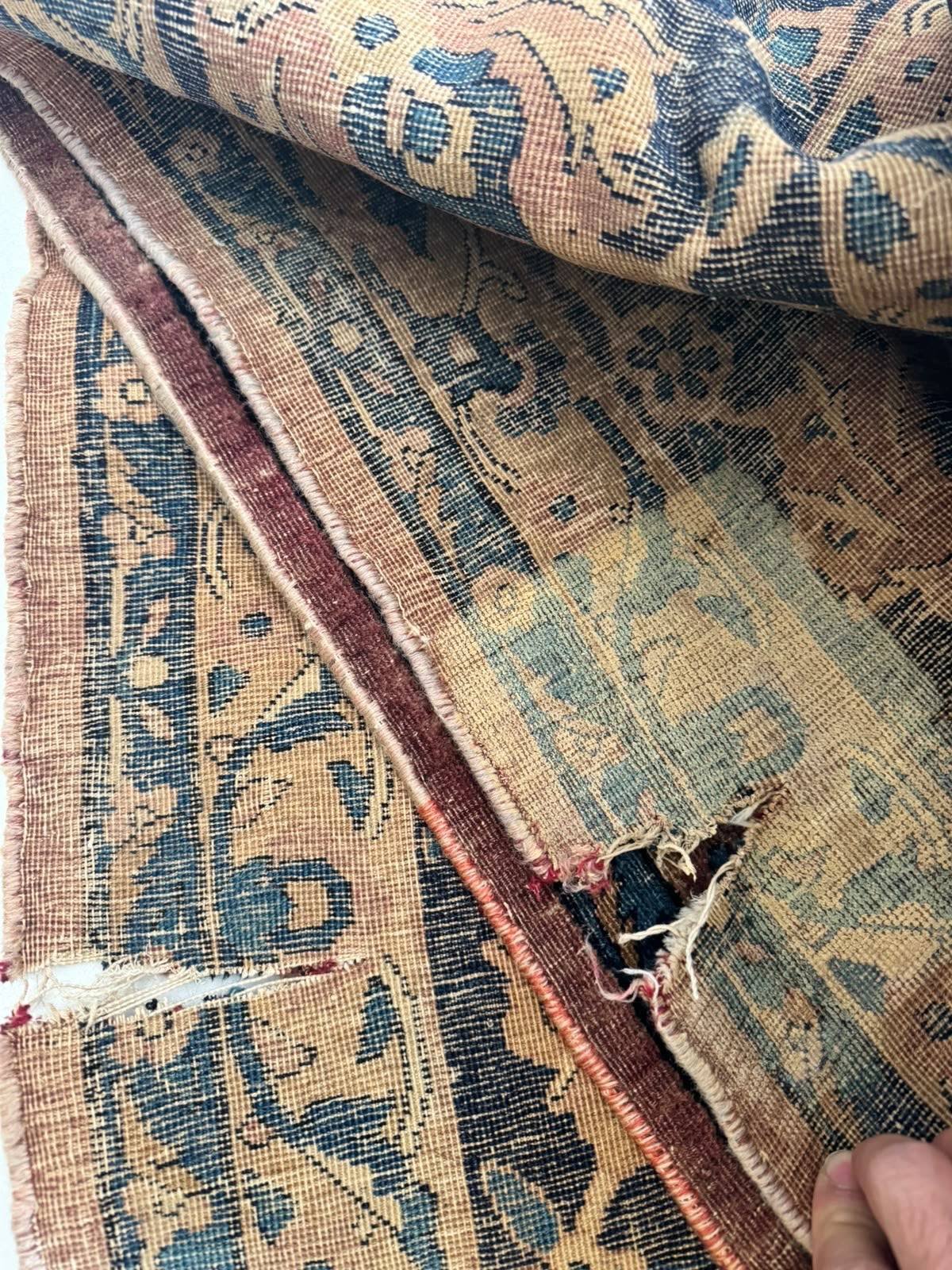
Sydney does rain like it’s got something to prove. One minute you’re enjoying a flat white in the sun, the next a storm cell has parked itself over your suburb, and your ground-floor hallway is wearing a new puddle. Or maybe it wasn’t a storm at all. Maybe the dishwasher gave up, a pipe let go behind the wall, or someone knocked a full vase onto the good rug. Either way, you’re now staring at a soggy, heavy, slightly sad-smelling rug and wondering whether it’s a goner.
Here’s the good news: it usually isn’t. Water-damaged rug restoration is a real, well-proven process, and most rugs that get proper attention early can be saved. The catch is speed. I’ve seen the same rug come back beautifully when it was dealt with in a day, and I’ve seen a near-identical one end up in a skip bin because it sat wet over a long weekend. Time is the whole game.
In this guide, I’ll walk you through exactly what to do in the first 24 hours, how flood water differs from a simple spill, how drying, mould and odour control actually work, and when it’s smarter to hand the job to a professional. Think of it as a calm, mate-to-mate briefing on water-damaged rug restoration, minus the jargon and the panic.
What Water Actually Does to Your Rug (and Why the Clock Is Ticking)
Water-damaged rug restoration is the process of removing moisture, contaminants, mould and odour from a rug that has been soaked, then returning its colour, texture and structure as closely as possible. That’s the short answer, and it’s the one I’d give if you asked me over a coffee. The longer answer starts with understanding what a soaking does to the fibres, because once you see the damage, the urgency makes sense.
A rug is basically a dense woven sponge. Wool, cotton, silk and viscose all pull water deep into their foundation, not just the pile you can see. Within a few hours, dyes can begin to bleed, especially in older or hand-knotted pieces. Within 24 to 48 hours, the warm, humid conditions we get across Sydney for much of the year let mould spores wake up and spread. After that, cotton foundations can start to weaken and rot, and the smell goes from “damp” to “something died in the lounge room”.
The mistake most people make is treating a flooded rug like a spilled-coffee situation. A quick dab and a fan won’t cut it, because the moisture that matters is the moisture you can’t see. That’s why proper water damaged rug cleaning and flood damaged rug restoration focus on drying the core of the rug first, then cleaning it. Clean a rug that’s still wet underneath and you’ve simply sealed the problem in. It’s like putting a fresh coat of paint over a leaking ceiling: lovely for a week, then very much not.
Emergency Rug Water Damage Cleanup: Your First 24 Hours
If you remember one thing from this article, make it this: the first day decides everything. Emergency rug water damage cleanup is less about scrubbing and more about getting the water out, getting air in, and keeping yourself safe while you do it. A wet wool rug can weigh several times its dry weight, so don’t be a hero. Grab a second pair of hands before you lift anything, and keep your back out of the story. Here’s the order I’d work in, whether it’s a burst pipe in a Surry Hills terrace or a storm surge in a Parramatta garage.
- Switch off the power first. If water has reached power points, appliances or cords, turn off the electricity at the switchboard before you step in. A rug is never worth a shock.
- Lift the rug off the floor. Wet rugs bleed dye onto floorboards and tiles and can warp timber. Get it up and onto a clean, waterproof surface or over a rail, and avoid rolling it tightly while it’s soaked.
- Blot and extract, don’t rub. Press clean towels into the pile, or use a wet vacuum if you have one. Rubbing pushes water deeper and can distort the fibres.
- Get the air moving. Use fans and a dehumidifier, and open windows if the weather’s dry. Skip hairdryers, heaters and harsh direct sun, because heat can shrink wool and fade silk.
- Take photos and notes. Snap the damage, the water source and the time. Your insurer will thank you later.
- Call a specialist within the day. A professional rug water damage restoration team can extract moisture you can’t reach, and the sooner they start, the cheaper and kinder the fix.
Notice what’s not on the list: shampoo, bleach and steam cleaners. Those come later, if at all, once the rug is properly dry and assessed.
Flood Water vs Water Spill: Not All Wet Rugs Are Equal
Here’s where many Sydneysiders get caught out. A spill from the kitchen tap and a rush of stormwater through your front door are both “water damage”, but they’re very different animals. The source of the water decides how risky the job is, which cleaning method is safe, and whether water-damaged rug restoration is even the right call. Restoration professionals group water into three categories, and it helps to know which one you’re dealing with before you do anything else.
| Water type | Typical Sydney source | Risk level | What it means for your rug |
| Clean water (Category 1) | Burst supply pipe, overflowing tap, a spilled drink | Low at first, but rises fast | Usually fully restorable if dried within 24 to 48 hours |
| Grey water (Category 2) | Washing machine or dishwasher overflow, aquarium leak | Moderate | Needs proper sanitising during water damaged rug cleaning, not just drying |
| Black water (Category 3) | Storm flooding, sewage backflow, rising creek or river water | High | Needs specialist flood damaged rug restoration with disinfection; sometimes not worth saving |
The thing to burn into your memory is that clean water doesn’t stay clean. A rug that sits wet for a couple of days effectively “upgrades” itself to a higher-risk category, because bacteria and mould love a damp, warm weave. Flood water is the real troublemaker. It carries silt, bacteria, oils and who-knows-what from drains and gutters, and it drags all of it deep into the pile. If your rug has met flood water, treat it as contaminated: wear gloves and a mask, keep kids and pets away, and don’t use it again until it’s been professionally treated.
That’s also why I’m cautious about promising miracles on cheap, machine-made rugs that have been through floodwater. Sometimes the honest advice is that restoration costs more than the rug is worth. But for wool, silk, antique and sentimental pieces, a proper professional rug water damage restoration is almost always worth a serious look.
Wet Rug Drying Services: How a Professional Dries What You Can’t
Drying sounds simple. Hang it up, wait, done. In reality, drying is the most technical part of water-damaged rug restoration, and it’s where DIY attempts most often go sideways. Wet rug drying services work on the principle that a rug must be dried evenly, quickly and gently, all at once. Too slow and mould moves in. Too fast or too hot and you get shrinkage, stiff fibres and colours that run into each other like a bad tie-dye experiment.
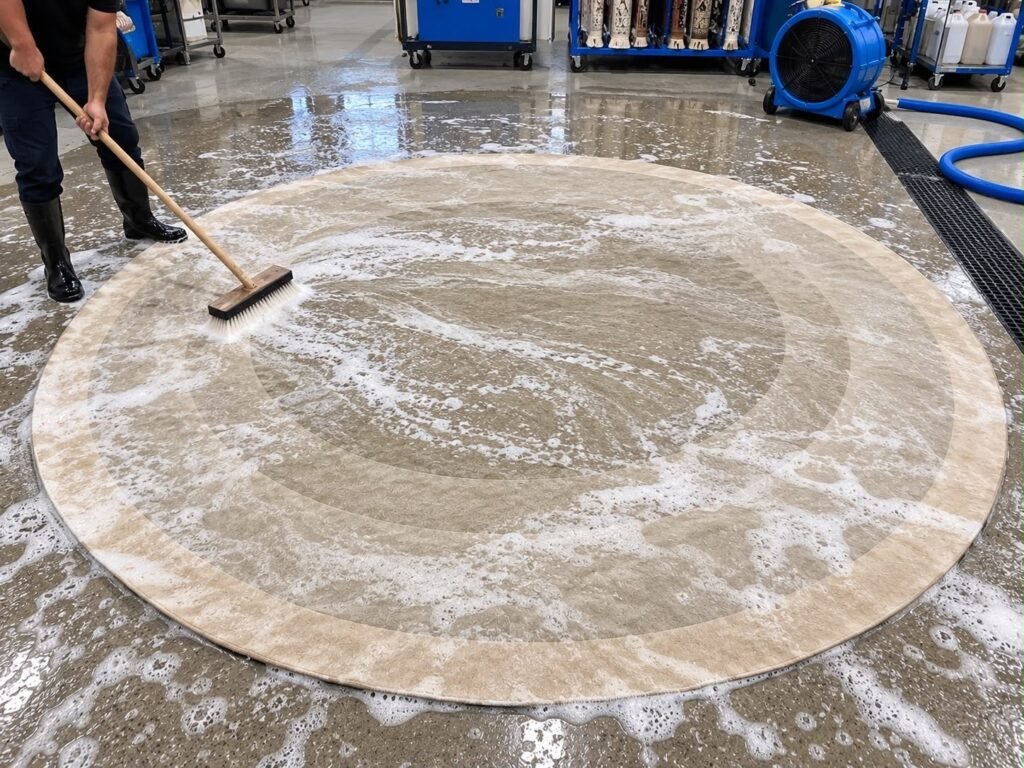
A professional starts by extracting as much water as possible, usually with a high-powered vacuum or a centrifugal spin that pulls moisture from the foundation without crushing the pile. Then the rug goes into a controlled drying space with airflow, low humidity and moderate warmth, often laid flat or suspended so air can circulate on both sides. Moisture meters check the core, not just the surface, which matters because a rug can feel dry on top while staying damp near the foundation. It’s the same logic as a roast chicken: golden outside doesn’t guarantee cooked inside.
Once the rug is fully dry, it’s washed. That order is deliberate. Washing a rug while the foundation is still saturated simply adds more water to the problem. After a gentle wash, the rug is dried again, groomed and checked for colour fastness, pile direction and any warping. If you’re comparing providers, ask whether they test moisture levels at the core and how long a typical rug stays in their drying room. A solid answer to that question tells you more than any flashy brochure. At Sydney Rug Spa, this controlled, step-by-step approach to water-damaged rug restoration is exactly how we protect your rug’s shape, softness and colour.
Rug Mould and Mildew Removal: Beating the Fuzzy Invader
Mould is the uninvited guest that turns a manageable soaking into a proper headache. Rug mould and mildew removal is the part of water-damaged rug restoration that deals with fungal growth: killing active mould, lifting stains and neutralising spores so they don’t return. Mould typically shows up as fuzzy white, green or black patches, often on the back of the rug first, which is why you should always flip it over and check. Sydney’s humidity is a gift to mould, so a rug that stays damp for more than a day or two is a prime candidate.
What makes mould more than a cosmetic problem is health. According to the NSW Health mould fact sheet, absorbent materials such as carpet that become contaminated may need professional cleaning or replacement, and people with asthma, allergies or weakened immune systems are more at risk. The same goes for rugs. If you’ve got a mouldy rug in a home with kids, older relatives or anyone with breathing issues, this is firmly specialist territory rather than a weekend project.
Professional mould treatment is a layered process. First the loose spores are removed with careful vacuuming, ideally outside or in a controlled space, so they don’t spread through your home. Then the rug is washed with a fibre-safe antimicrobial solution, rinsed thoroughly and dried completely. Notice what’s missing: bleach. Household bleach can strip dye and burn natural fibres, so it’s not the hero people think it is. Light mildew caught early may be removable with gentle cleaning, but deep or recurring mould usually means the foundation has been compromised, and that’s when a frank assessment matters more than optimism.
Water Damaged Persian Rug Restoration: Handle With Care
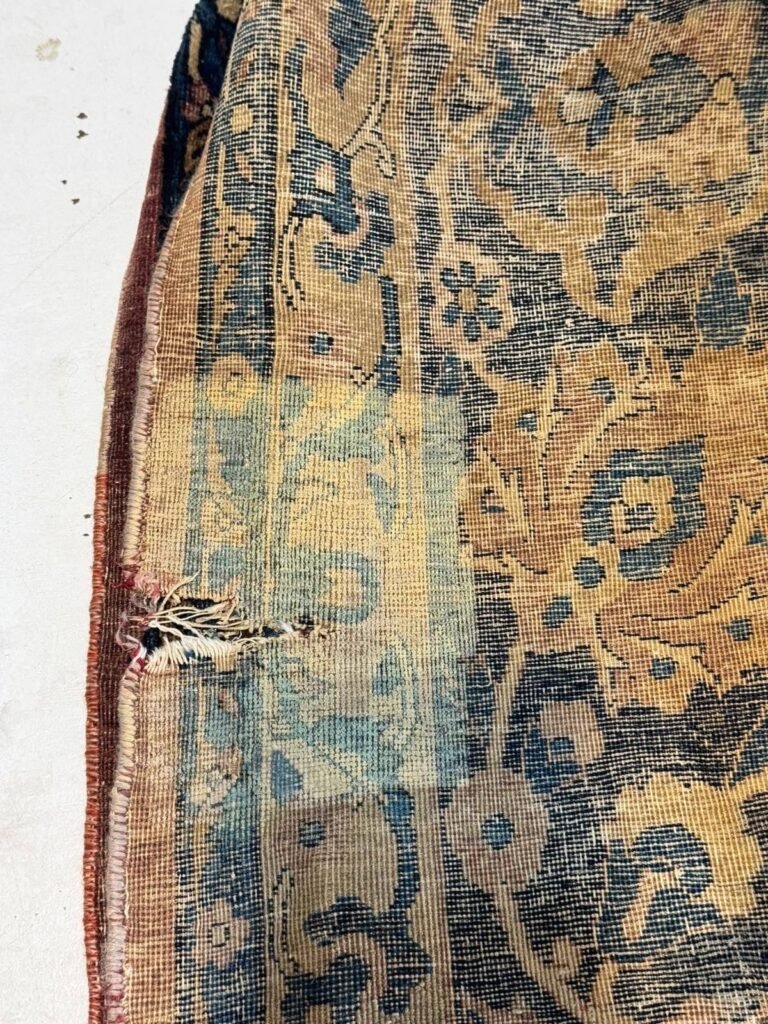
If the rug in question is a hand-knotted Persian or Oriental piece, slow down. These rugs are more than floor coverings. They’re heirlooms, investments and, frankly, the best-dressed thing in the room. Water damaged Persian rug restoration needs a gentler hand than a standard machine-made rug because natural dyes can bleed, wool and silk react differently to moisture, and the cotton foundation can shrink unevenly, leaving the rug looking wavy or cockled.
The biggest risk is dye migration. When a hand-dyed red meets water and sits against a cream border, you can end up with a pink halo that’s very difficult to reverse. This is why professionals test for colour fastness before any wash, and why they lay the rug flat and dry it with controlled airflow instead of hanging it from a rail, which can stretch the knots. If you’ve got a Persian rug that’s taken on water, keep it flat, keep it out of the sun, and resist the urge to scrub.
Good news for the sentimental among us: water-damaged rug restoration on valuable rugs has a strong success rate when the work begins early. Repairs such as re-knotting, fringe restoration, re-blocking to square up the shape and careful colour correction can bring a damaged piece back close to its former glory. I always tell people the same thing: a Persian rug that’s survived fifty years has probably survived worse than your burst pipe, so give it a fighting chance with a specialist. If you’re weighing up water-damaged rug restoration for a family piece, ask about a written condition report first, so you know what’s recoverable before work begins.
Rug Odour Removal After Water Damage: Getting Rid of That Smell
A rug can look perfectly fine and still smell like a wet dog in a damp basement. That musty odour comes from bacteria and mould feeding on moisture trapped deep in the foundation, and no amount of air freshener will fix it. Rug odour removal after water damage works by tackling the cause, not the symptom. The rug needs to be thoroughly cleaned, rinsed and dried so that the organic matter producing the smell is gone, not covered up.
When the smell is stubborn, professionals use a few extra tricks. Deep rinsing flushes out contaminants from the base of the pile, enzyme-based treatments break down organic residue, and, for tougher jobs, deodorising or sanitising agents safe for the specific fibre are used. A good rule of thumb: if the odour comes back when the weather turns humid, there’s still moisture or residue in the rug. That’s a sign the drying or cleaning step wasn’t finished properly, and it’s worth asking for a re-check instead of just living with it.
You can help the result stick at home. Keep the room well ventilated, run a dehumidifier for a few days after the rug returns, and make sure the floor beneath is completely dry before laying it back down. A slightly damp underlay is the most common reason a restored rug starts smelling again. Done right, water-damaged rug restoration leaves you with a rug that smells like nothing at all, and honestly, that’s the highest compliment a rug can get.
DIY or Professional Rug Water Damage Restoration? An Honest Comparison
I’m all for a bit of DIY, but water damage is one of those jobs where a small mistake gets expensive quickly. Water-damaged rug restoration done at home can work for a small, clean-water spill on a sturdy synthetic rug caught within a few hours. Beyond that, the risks stack up fast. Here’s how I’d weigh it up.
- Go DIY when: the spill was clean water, it happened in the last few hours, the rug is small and synthetic, and you can dry it fully within a day.
- Call a professional when: the water was grey or black, the rug is wool, silk, antique or Persian, it’s been wet for more than 24 hours, or you can see or smell mould.
- Consider replacing when: the rug is low-value, was soaked in sewage or flood water, or the foundation has rotted or fallen apart.
Cost is the other side of the coin. A professional job costs more than a bucket and a towel, but a rug that rots, shrinks or grows mould costs you the whole rug, plus possibly a floor repair and a health scare. Pricing varies with size, fibre and how contaminated the water was, so a proper inspection and quote is the sensible first step. And if your insurer covers the damage, ask whether they’ll accept a restoration invoice. Many will, as long as you’ve kept those photos from earlier.
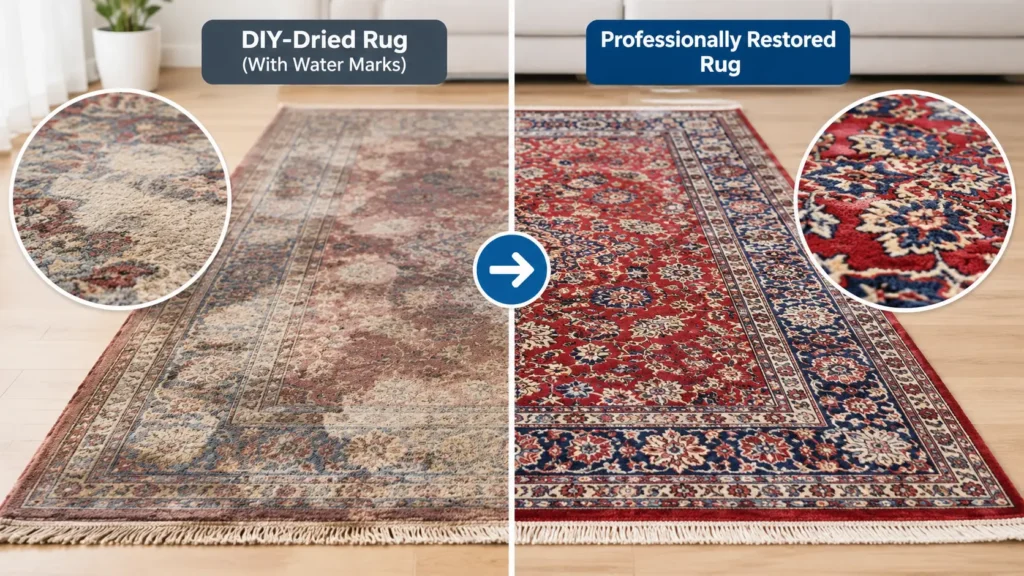
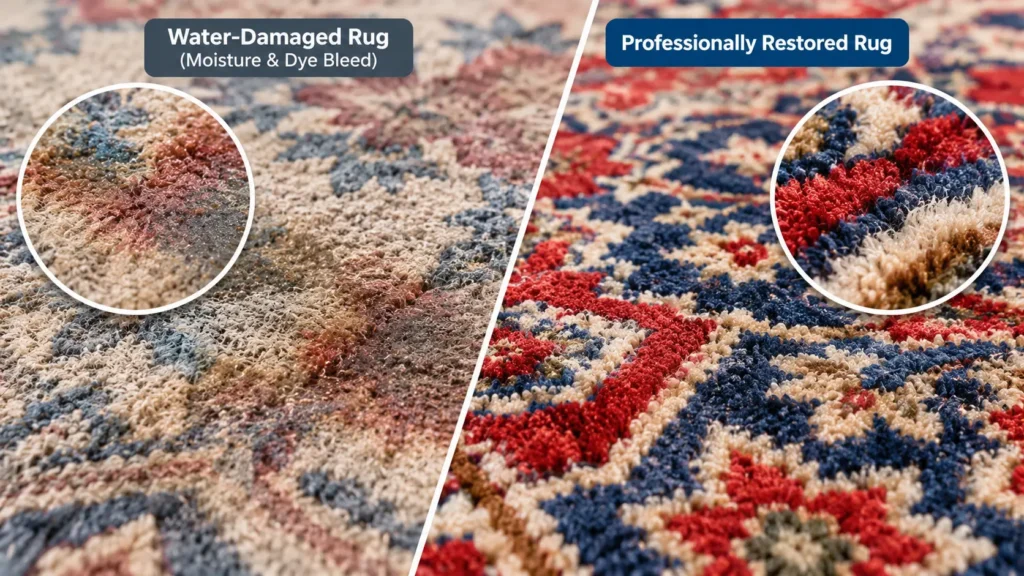
side-by-side comparison of a DIY-dried rug with water marks and a professionally restored rug here.
Conclusion: Act Fast, Dry Thoroughly, Call a Pro
Water-damaged rug restoration comes down to a few simple truths. Move fast, lift the rug off the floor, extract and dry it thoroughly before cleaning, and know whether you’re dealing with clean, grey or flood water. Mould, mildew and odour are all symptoms of moisture left behind, which is why professional drying and washing beat quick fixes every time. Valuable pieces like Persian and wool rugs deserve specialist care, and acting within 24 hours gives water-damaged rug restoration the best chance of success. DIY works for small, clean spills, but anything bigger is safer and cheaper in the long run with an expert.
If your rug has been caught in a flood, a burst pipe or a nasty spill, don’t wait and hope. Get in touch with Sydney Rug Spa today for an honest assessment and a clear quote. Our team handles everything from emergency rug water damage cleanup and wet rug drying services to mould removal and odour treatment, so you get your rug back looking, feeling and smelling the way it should. Reach out now, and let us turn your water-damaged rug restoration worry into a job already underway.
Water-Damaged Rug Restoration FAQs
1. Can a flooded rug be saved?
Often, yes. Whether a rug can be saved depends on the type of water, how long it stayed wet and what it’s made from. Wool, silk and Persian rugs soaked in clean or grey water and treated within 24 to 48 hours usually respond well to water-damaged rug restoration. Rugs exposed to sewage or heavily contaminated flood water, or ones left wet for several days, are harder cases, and a professional assessment will tell you honestly whether saving them makes sense.
2. How long does water-damaged rug restoration take?
It varies with the rug’s size, thickness and how saturated it was. Thorough drying alone can take several days for a thick wool rug, and the full process of extraction, drying, washing, second drying and finishing often runs a week or more. Rushing it is the fastest way to cause shrinkage or trap moisture, so a good provider will give you a realistic timeframe up front.
3. How soon should I act after a rug gets wet?
As soon as it’s safe to do so. Aim to lift, blot and start drying the rug within the first few hours, and have a specialist involved within 24 hours. Mould can start growing within 24 to 48 hours in warm, humid conditions, so every hour you wait makes water-damaged rug restoration harder and more expensive.
4. Can mould and bad smells be removed from a water-damaged rug?
In most cases, yes, provided the rug’s foundation hasn’t rotted. Professional rug mould and mildew removal uses fibre-safe antimicrobial washing, deep rinsing and complete drying, which also deals with the source of the smell rather than masking it. If the odour keeps returning after treatment, the rug is probably still holding moisture and should be re-checked.
5. How much does water-damaged rug restoration cost in Sydney?
There’s no flat rate, because pricing depends on the rug’s size, fibre, age, the water category and how much repair work is needed. A written quote after inspection is the most reliable way to know. As a general rule, restoring a quality wool, silk or Persian rug costs far less than replacing it, while restoring a cheap synthetic rug often doesn’t make financial sense.